![[Watch the Movie!]](/images/newsitekumatrix.jpg)

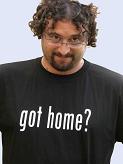
AS SEEN THIS MORNING AT MY (HIS) ABODE IN BEIT EL ISRAEL


posted by Yishai @ 10:02 AM4 Comments
Links to this post



 About KumahAliyah Revolution AlbumThe Kumatrix Video!ArticlesPrintable PropagandaLatest VideosKumah on TwitterKumah on FacebookPast EventsDuty of Aliyah BookletVolunteerLegal InfoContact UsHome
posted by Yishai @ 10:02 AM4 Comments
Links to this post
 Chief Sephardi Rabbi Shlomo Amar called on all capable to fast and pray this Thursday in hope that God will bring an end to the drought that has depleted Israel's water sources and struck a blow to local agriculture.
 Labels: Absorption, Beauty of the Land, Yishai
Full post and comments...
posted by Yishai @ 9:26 AM0 Comments
Links to this post

Labels: Beauty of the Land, Good News, Pinchas
Full post and comments...
posted by Pinchas @ 4:04 PM2 Comments
Links to this post

Labels: Beauty of the Land, Good News, Land of Israel, Pinchas
Full post and comments...
posted by Pinchas @ 6:52 PM4 Comments
Links to this post
posted by Yishai @ 12:09 PM4 Comments
Links to this post
 Shavua Tov Yishai,
Labels: Beauty of the Land, Guest, Yishai
Full post and comments...
posted by Yishai @ 7:10 PM0 Comments
Links to this post
 Please check out the amazing video of our Klean-Up in Hebron at the Tomb of Ruth and Yishai (just in time for Shavuot!)
 Labels: Beauty of the Land, Hebron, Video, Yishai
Full post and comments...
posted by Yishai @ 5:29 PM0 Comments
Links to this post

Labels: Beauty of the Land, Hebron, Jewish Pride, Yishai
Full post and comments...
posted by Yishai @ 12:46 PM1 Comments
Links to this post


Labels: Beauty of the Land, Photos, Yishai
Full post and comments...
posted by Yishai @ 3:58 PM3 Comments
Links to this post


Labels: Beauty of the Land, Jewish Holidays, Yishai
Full post and comments...
posted by Yishai @ 5:44 PM0 Comments
Links to this post
Labels: Aliyah, Beauty of the Land, Video, Yishai
Full post and comments...
posted by Yishai @ 1:11 PM2 Comments
Links to this post

The future brand and marketing image of Israel:With the exception of 4 and 6, basically they are trying to brand Israel as Italy, France or Spain.
1. Tel Aviv Fashion Brands
2. Tel Aviv Modern Dance Troupes
3. Tel Aviv Beach Life
4. Israeli High Technology Developments
5. Tel Aviv Night Life
6. Israeli High Technology Medical Developments
7. Israeli Wine
Once Israel becomes "a nation like any other" we are thrust onto a world scale we have no right being on. On that scale, Israel appears to be a pretty crummy nation with nothing special at all. Hence the post-Zionists. But if we stay on the scale we are supposed to stay on, the "light-to-the-nations" scale we are untouchable! When we promote G-d, no nation anywhere can come close in terms of history, culture, food, family life, beauty, and spirituality. Indeed we have something no other nation has.To summarize, Israel already has an excellent – but discarded - brand. The powers-that-be in the government just don’t like it very much. But this brand has been around for over 3,300 years! Let me explain it in simple terms:


Labels: Activism, America, Beauty of the Land, Government, Jerusalem, JewBlogs, Jewish Pride, Photos, Pinchas, Shabbat, Video
Full post and comments...
posted by Pinchas @ 7:02 PM5 Comments
Links to this post

Labels: Beauty of the Land, Torah, Yishai
Full post and comments...
posted by Yishai @ 3:00 PM1 Comments
Links to this post


Labels: Beauty of the Land, Guest, Yishai
Full post and comments...
posted by Yishai @ 7:51 AM3 Comments
Links to this post

Labels: Beauty of the Land, Torah, Yishai
Full post and comments...
posted by Yishai @ 8:11 AM1 Comments
Links to this post

“Skittering over the hilltops, jumping between the mountains” (Song of Songs 2:8). In sight for a moment, out of view for two, and once again back into range. How aptly the relationship depicted in Song of Songs between God and Israel describes that between the Jewish people of today—so clearly longing for Redemption and for Israel’s material and spiritual success—and the modern State of Israel.
We see so much good and beauty in Israel as it skitters before us over the hilltops—and then we recall its many shortcomings and problems as its glory falls out of view behind the mountains. True, we know it will soon come into view again—and maybe this time even forever! But when we look at the horizon and see nothing but the fleeting image of what could be, it is hard to remain encouraged. Perhaps all that’s missing is to view the mountainside from the proper angle?
Some decades ago, when I first arrived in Bayit Vegan, a neighborhood in Jerusalem, for high school, it seemed as if all was right with the country. A sense of confidence prevailed: The Kotel was ours, and work was underway to build a plaza in front of it. The War of Attrition was behind us, and whatever terror attacks there were—and there were—were faced with unity and a sense of justice in our national cause. The ba’al teshuvah movement was going strong, and new yeshivot seemed to be opening everywhere (though at a snail’s pace compared to the current frenzied rate). The ingathering of the exiles was proceeding apace, and the economy was growing. While it was difficult to get a phone line for a private apartment, the number of months one needed to wait seemed to be gradually dropping to single digits.
And now, several months before Israel’s sixtieth birthday, has everything turned upside down? Must we feel, as the introduction to this series of articles implies, that all of our accomplishments amount to nil? Must we feel that then we had a sense of unity, but today we don’t, that then we had confidence and direction, but today we don’t? Yes, we all know the many terrific problems we currently face, but must we assume that our national history has gone into reverse?
Am Yisrael is always advancing along the road toward Redemption, and especially so during the past 120 years. For more than 1,800 years we had been waiting patiently for the Divine call “Return, My children, to your borders!” It came finally, unmistakably, in the late 1800s, when Jews not only began arriving in the Land of Israel in large numbers, but were also self-supporting!
As the great visionary Rabbi Shmuel Mohilever wrote in 1890 after a visit to the Land:
Can anyone not see the finger of God in all that has befallen us? .... It has been now six years that towns and villages and wells and flocks have arisen from the dust; the fields are full of grain, and grapes and vines cover the hills. Fourteen colonies have been founded during this period, and 3,000 of our brothers are working there. Before, the holy ways were filled with thorns and thistles, and people could barely walk here and traveled only by covered wagon—but now, we travel from Yaffo to Jerusalem, Hebron, Petach Tikvah, Rishon LeTzion, Mikveh Yisrael, Zichron Yaakov—and all on a straight path, the “king’s way,” in a carriage drawn by three horses. And Jerusalem, so desolate before, is now as fresh as in its youth; outside the walls of old Jerusalem, we see straight and beautiful streets lined by hundreds of houses, soon to be thousands; and all the European countries are trying to buy a portion of the Holy Land and Jerusalem. Is all this not a sign and wonder that Hashem has remembered His people and His Land, and that all that He wrought was for our good, to bring us up to the heights of Mt. Zion?
Over a century later, can there be any doubt that the process of Redemption has only intensified? When commemorating sixty years of statehood, we must not look myopically at the past few years, but rather at the entire picture—beginning with the Exile, and extending through the centuries of darkness, wandering and persecutions to the gradual return of the Jewish people to their home—exactly as was predicted by our prophets and sages.
Though for many years it was hard to see how this process was developing, in our generation we are fully confident that our ascent towards complete national Redemption has started—and that we ourselves are playing an active role in moving the process along. As Rabbi Eli Sadan, the head of the first mechinah (pre-army yeshivah program) in Israel, wrote in a recent pamphlet:
The front line of great rabbis of the past generations—Rabbi Yosef Karo, the Gaon of Vilna, Rabbi Zvi Hirsch Kalischer, Rabbi Avraham Yitzchak HaCohen Kook and many others—told us: “Holy flock, the time of your redemption has arrived!” They marked the way for us—yet astonishingly, it was very hard for the Jewish people to accept the ruling [that the period of forced exile was ending and the time to return to the Land of Israel had come]. This was chiefly because it was truly a hard thing to do—to adopt a national lifestyle of politics, army, economy, and the like, and all in the old/new garb of the traditional sanctity and purity of Israel. How difficult! But “kol dodi dofek, my beloved is calling,” and “et l'chenenah ki va moed, the time has come to favor the Land”; the nation, in the depths of its soul, began to awaken; the Master of the Universe dropped the walls and opened before us the gates of Eretz Yisrael.…The time had come.
Even if the religious public hesitated, Rabbi Sadan continued, the non-religious Jews were unable to wait any longer. Creating facts on the ground, they burst forward. Tradition states that the coming of the Mashiach will take place in a similar manner—Mashiach “Ben Partzi” is destined to come from Peretz, the one who paratz, burst forth, into the world before his twin brother.
Ever since those early years of modern Zionism, Israel has continued to be on the ascendancy, with more Torah, more religiosity, more hi-tech and scientific inventions, more production of agriculture, more development of cities and towns—and more growth in the Jewish population.
Everyone is familiar with the fantastic rate of growth and construction in Jerusalem, Judea and Samaria. But what about the rest of the country? Take, for example, sleepy old Afula. When I lived there some twenty years ago, I would take my bicycle for weekly rounds around the outskirts of the city to check that the eruv was functional. Today, given Afula’s tremendous growth, the former “outskirts” are in the middle of town, while the current outskirts are blocks and blocks away in each direction.
Could any Jew who experienced the Holocaust sixty-five years ago have dared to entertain such a scenario? When commemorating sixty years of statehood, we must not look myopically at the past few years, but rather at the entire picture.Never in the last 1,930 years have the Jewish people, on a national scale, had it so good!
But, of course, there is the other side of the coin. If everything is so great, why does everything feel so bad? The problems in Israel are many and great. With a total lack of confidence in the necessity of listing them at all, here they are: Corruption in the government, poor quality of education, discord about our national goals, a growing non-Jewish population, growing socio-economic gaps, increased estrangement from Judaism and the Land of Israel, lack of inspired leadership, apathy regarding the fate of Jerusalem and uncertainty regarding the nation’s future and violent crime.
So what do we do? Give up? Throw in the towel? Say it was a good try but better luck next time, see you again in a couple of centuries? The very fact that we can entertain this question is an absurdity. Can you imagine the French or the Brazilians ever “giving up” and leaving their country? Is there any nation that would actually consider the option of calling for a “do-over”?
Moreover, it’s an incredible chutzpah when Jews living chutz la’Aretz criticize Israelis and their political leaders and assert that because of their mistakes, they will be staying in the Diaspora. Such sentiments are often found in talkbacks to Internet news reports on Israel.
History has decreed that our prophets’ Divine messages are coming true before our eyes; we can either jump on the bandwagon or get left behind. But to claim membership in a nation that has taken the path of revival while at the same time choosing to remain exiled is untenable in the long run.
This, then, is both the challenge and the solution: aliyah. It’s not just for those who live outside Israel (immigration) but also for those who already live here. The word aliyah comes from the root word aleh, which either means to “go up” or to “raise up.” Those who live here should be continually trying to raise the quality of Israeli life on all planes. Aliyah to Eretz Yisrael is necessary, for the sake of both the individual and the nation. We need Jews here, and they need to be here. The Jewish nation suffers when her children are not home, and the children suffer when they are cut off from their source.
At the risk of stating the obvious, the more people move to Israel in order to help solve our collective problems, the faster those problems will be solved. Decades ago, some religious leaders did not encourage aliyah for fear that the State would not be religious. Ironically, this almost guaranteed that the State would be irreligious.
There are those today who mock the religious leaders of previous decades for taking this road, yet they themselves take a similar approach today. However, there’s a difference. Back then, it was “spiritual” problems that kept some Jews away. Today, it is “political” problems. “First get rid of your government,” they say, or “your bureaucracy or [fill in the blank] and then I’ll consider coming.” (Insert small dose of healthy skepticism here).
Let us not make the same errors again. No more “I-told-you-so’s” after the fact. Instead of once again finding the perfect excuse to remain in the Diaspora, let us jump into the fray with real-time fixes. Let us be a part of the solution, not the problem.
And those who live here in Israel must also make aliyah. We must be constantly on the lookout, as more and more people already are, for ways to alleviate the problems that are closest to our hearts. We must be constantly on the alert to radiate to others that life in Israel, in the long-range, is not only good but is getting better.
And more: As we increasingly hear our rabbis—and our children—say, let us grab the chance to establish a society predicated on Torah values. Let us forge ahead to become a strong presence and influence in the army, in the courts, in the media. Let us combine purity and on-the-ground action to build our national home in Eretz Yisrael. Let us raise a generation imbued with dedication and even sacrifice. Let us be like the early pioneers, but with the added great ambition to live a life of sanctity in accordance with the Torah of Israel.
Let us not be fooled by what appears to be thriving Jewish life in the United States. The center and the heart of Jewish life is here in Israel. Taking active part in the enterprise that is Israel is the challenge of our times and is an opportunity that no one must miss. After sixty years, it’s way past time to come home.
---------
Rabbi Fendel has been the senior news editor of Arutz Sheva Israel National News since 1995. He studied in Yeshivat Merkaz HaRav for five years and started Yeshivat Mevaseret Zion for international students. He is the author of One Thing I Ask (Jerusalem, 1995) and has lived in Beit El with his wife Bina and their eight children since 1992.
Labels: Beauty of the Land, Neo-Zionism, Yishai
Full post and comments...
posted by Yishai @ 9:07 AM1 Comments
Links to this post

Labels: Beauty of the Land, Jewish Holidays, Torah, Uriah
Full post and comments...
posted by Uriah @ 12:32 PM1 Comments
Links to this post

On Israel’s Only Jewish-Run Pig Farm, It’s The Swine That Bring Home the Bacon
I stood beside the road with a traveling backpack and a yarmulke, my arm extended, hitchhiking to the junction from Ramat Raziel to catch a bus home. I was singing “Lev Tahor,” a verse from Psalm 51 meaning “pure heart” that I’d been singing all Sabbath long. A car stopped, and a bearded man in a knit yarmulke picked me up. As I entered his car, he turned to me: “I’m Oren… So where you going?” Damn. I’d begun to hate this question, especially when asked by religious people. “Kibbutz Lahav,” I answered, expecting a gasp. Unfazed, he further inquired, “And what do you do there?” Again, I hesitated, this time with dread. “Uh, well… I work on their pig farm.”
And just like that, I managed to overwhelm and confuse Oren, as well as myself, while simultaneously expressing the contradiction that pig farming in Israel played in my life for the two months I spent working at Kibbutz Lahav. Luckily, Oren was an open-minded man whose parting words to me were: “God put you on the pork farm for a reason.”
The kibbutz and its pigs sit comfortably in the northern Negev, just 30 minutes north of Beersheba, surrounded by the Lahav forest, Israel’s largest manmade woodlands. Pine trees, scattered acorns and orderly planted “wild” grasses and flowers seem somewhat out of place in the desert hills. The iconoclastic kibbutz similarly appears incongruous in a Jewish part of a Jewish country, next door to religious Kibbutz Shomeriya. As I learned over the course of two months, though, the kibbutz, just like the forest, fits into the complex web of Israeli and Jewish identity in more ways than one.
Toward the end of January, I moved onto Kibbutz Lahav in an effort to understand the phenomenon of pigs in Israel. While there are a number of similar farms in Israel, Kibbutz Lahav is unique because, as its slogan suggests, it is “the meat from the Kibbutz.” All the other pig breeders operate in a zone in the North dominated by Christian Arabs, the only place where raising pork is legal, according to a 1962 law. Kibbutz Lahav, a Jewish-run farm, proudly operates outside the legal zone.
Lahav’s pig breeding gained widespread notoriety because of its legal loophole, almost talmudic in its ingenuity, in which the kibbutz is exempt from the law and can rightfully raise pigs for research as a part of its Animal Research Institute. Thus, the kibbutz raises pigs for science and eats the excess, developing over the years a rather staggering excess. For many years the institute was no more than an ad hoc veterinarian research institute, which, on the scientific side, boasted little more than the successful splicing of an ibex with a goat.
“Israelis weren’t ready to pay more money for it,” said Dodik, a kibbutz elder whose last name I never learned, as was the case with most people on the kibbutz.
Today, as a result of the recent biotech boom, the institute is the center of Israel’s most spectacular medical advancements, where religious Jewish scientists are among the hundreds of researchers who use the pigs for innovative experimentation.
Despite the institute’s success, raising and processing pig meat is the main purpose of the farm, as the 10,000-plus animals suggest. Most workers commute from Beersheba each morning. Jewish immigrants from Argentina and Russian immigrants with little Jewish background make up the largest proportion of the 50-something workers. On any given morning, the workers are spread out among the 15 or so indoor buildings, administering antibiotics, slaughtering and butchering, inseminating sows and moving pigs to the fattening rooms from their weaning rooms.
Eshai, a proud Israeli-born pork eater — and self-proclaimed messiah (he was born on the Ninth of Av, the prophesied birthday of the future messiah) — was my supervisor for most of February. He seethed with a cynicism toward all things Jewish and traditional. I once asked him why nobody collects and sells pigs’ milk. He answered me, grinning: “Pigs’ milk isn’t kosher.”
One day after work, when changing out of my coveralls and knee-high boots, a new immigrant from Brazil, Yehoshua, was discussing his former religiosity with Marcos when he mentioned in passing that he still didn’t eat pork. “Me neither,” I interrupted their conversation, excited to discover I wasn’t alone. “I keep kosher.”
Then Marcos chimed in, in his equally broken Hebrew: “Yeah, neither do I.” And there we sat, three confused Jewish pig farmers, when Imat, the Palestinian Muslim pig farmer, who also didn’t eat pork, entered the room.
How can you spot a kosher pig farmer? We blended in — except for Yehoshua, who always wore facemasks in a last-ditch effort not to inhale or ingest the same air as the pigs, or the floating fecal dust. Early on I also donned a facemask, but unlike Yehoshua, who can hardly understand Hebrew or English, I got the jokes and insults, such as “Jewboy” and “rookie,” from the Sabras, not to mention Eshai’s looks, which implied “pansy.”
It was when I learned from co-workers that our manager doesn’t eat pork, and that his manager and the head of the entire pork operation has a pork-free home, that I first felt at home, comfortable as a kosher Jew on the kibbutz. Through such revelations I saw the pig-breeding center as home to the same neurotic Jewish traditionalism that courses through my veins.
Such contradictions shed light on the beautiful and confusing Jewish identity of Kibbutz Lahav and its pigs. On Friday night in the kibbutz dining room, there is a Sabbath display of candlesticks, a challah cover and a Kiddush cup. Kibbutzniks thus have the Sabbath on their minds as they eat their special meal of braised pork or ham on the ceremonial white Sabbath linens. During our celebratory barbecue just prior to Purim, management handed out mishloach manot, traditional Jewish gift baskets, to all the workers, with a note wishing everyone a “happy Purim.” Most workers ate the hamantaschen as dessert after the grilled pork spare ribs. One Thursday, while I was shopping in the kolbo — the kibbutz grocery store — a panicked woman ran behind me to speak to the cashier, urgently asking if she could leave a ham in the freezer and collect it tomorrow for Friday’s dinner. When she left with permission to do so, I turned to the cashier woman, smiled and asked her if the meat was “for Shabbat.” She nodded, and we both laughed.
According to Dodik, one of the kibbutz founders, Lahav embarked on pork production by chance. In 1952, the year of the kibbutz’s founding and a period of major food shortages in Israel, the struggling Lahav received a gift of one boar and two sows from a neighboring kibbutz. After a number of years, and thanks to the will of a few kibbutzniks, those pigs became the kibbutz’s financial linchpin. As kibbutzim have been failing and Lahav, in particular, has had trouble, the pigs have remained a stable revenue producer, an unlikely friend to a Zionist institution.
And even though most kibbutzniks no longer “work in the pigs,” the porcine influence on the kibbutz is nearly impossible to miss. Ten thousand-plus pigs howl throughout the night, along with the desert jackals. There’s a dreaded western wind here that brings with it the inescapable and potent scent of industrial hog waste that cannot possibly be ignored. In the dining room there is almost always a pork option. The kibbutzniks find no need for the silly euphemisms used by greater Israeli society, like “white meat” and “white steak.” Pork, or at least the right to raise it, serve it and eat it, is no doubt a point of pride at Lahav today, and part of the kibbutz’s national legacy.
Labels: Beauty of the Land, Temple Consciousness, Yishai
Full post and comments...
posted by Yishai @ 6:01 PM0 Comments
Links to this post

I just published a collection of my essays in English. Each time I am asked if I am also releasing the volume in Hebrew I feel a pain deep inside me when I answer that no, right now, my publisher is only interested in an English edition. Indeed it is a shame because I wrote most of the essays in Hebrew as well.
Writing in Hebrew is a qualitatively different experience than writing in English. Hebrew is a more compact language than English. It has fewer words and the words it has are denser and more flexible than English words. A 1,200-word essay in Hebrew will be 1,800 words in English.
This is a mechanical difference. But there are deeper distinctions as well. One level beyond the mechanics is the multiple meanings of Hebrew words. The density of meaning in Hebrew is a writer’s dream. Nearly anyone can imbue a seemingly simple sentence with multiple, generally complementary meanings simply by choosing a specific verb, verb form, noun or adjective. These double, triple and even quadruple meanings of one word are a source of unbounded joy for a writer. To take just one example, the Hebrew word “shevet” means returning and it also means sitting. And it is also a homonym for club – as in billy club – and for tribe...
In 2005, the IDF named the operation expelling the Israeli residents of Gaza and Northern Samaria “Shevet Achim,” or returning or sitting with brothers. But it also sounded like it was making a distinction between tribesmen and brothers. And it also sounded like “clubbing brothers.”
As this one example demonstrates, one joyful consequence of the unique density of the Hebrew language is that satirical irony comes easily to even the most dour and unpoetic writers.
For a Jew, knowing, speaking and writing Hebrew is an intimate experience. This is particularly so for those of us whose mother tongue is not Hebrew – because as the secrets of the language slowly reveal themselves to us we feel we are discovering ourselves.
Hebrew encapsulates the entirety of the Jewish story. Modern Hebrew in particular is an eclectic amalgamation of classical Hebrew, Yiddishisms, and expressions from the Sephardic Diaspora experience. Greek, Roman, Aramaic, Turkish, Arabic and English expressions meld seamlessly into the stream of words. It is not simply that it is the language of the Bible. Hebrew is also an expression of the unique culture of a small, proud, often besieged, often conquered and permeable people.
Its power to explain that cultural experience and that historical baggage is something that often leaves a newly initiated member of the Hebrew-speaking world gasping in a mixture of disbelief and relief. It is unbelievable that a language can be so immediately and unselfconsciously expressive of feelings that have traversed millennia. Understanding its power as a tool of expressing the Jewish condition is one of the most gratifying discoveries a Jew can make.
But the experience of speaking in Hebrew and of living in Hebrew is incomplete when it is not experienced in Israel. It is one thing to pray in a synagogue in Hebrew or even to speak regular Hebrew outside of Israel. The former is a spiritual duty and a communal experience. The latter is a social or educational experience. But speaking Hebrew in Israel is a complete experience. Hebrew localizes the Jewishness, Judaism and Jews. It anchors us to the Land of Israel. Taken together, the Hebrew language and the Land of Israel stabilize a tradition and make the Jewish people whole.
I write all of this as a means of explaining why a Jew in the Diaspora, particularly the United States, would want to live in Israel. Leaving America is difficult on several levels. In my own experience, it involved physically separating from my entire family. It also involved cutting myself off from my language – English – and immersing myself completely in a tongue I had yet to master. Beyond that, it meant leaving a country that had done only good for me and for the generations of my family who fled to America from the pogroms in Eastern Europe at the turn of the twentieth century.
As someone who loves me told me 17 years ago as I packed my bags for an unknowable future, “People don’t emigrate away from America. They beg to come to its shores.”
But would it be right to characterize leaving America as an act of ingratitude? Do Jews have to reject America in order to go to Israel? No, we don’t.
Coming to Israel is not rejecting America. It is embracing a choice to become whole in a way that life outside of Israel cannot provide. That doesn’t mean life cannot be fulfilling for a Jew outside of Israel. Millions of Jews can attest to the fact. It certainly doesn’t mean that life in Israel is easier or safer or more lucrative than life is elsewhere.
Israel is a troublesome, hard, often irritating place. It is a young country that belongs to an ancient, eternal people who are all imperfect. Some Israelis, particularly those who today occupy the seats of power, are weak and irresponsible and often corrupt and self-serving.
Israelis have quick fuses. Among other things, this distinctively Israeli rush to anger makes being stuck in rush hour traffic a bit like dancing a waltz in the middle of a shooting range. Then too, service is not a concept that most Israelis – particularly in service professions – are even vaguely familiar with.
Beyond the general fallibility of Israelis, there are the wars and the hatred and the terror that make up so much of life in Israel. Being surrounded by enemies and living in the midst of jihad-crazed Arab states is like sitting on the edge of a volcano. And rather than acknowledge the danger and contend with it, Israelis – frustratingly and dangerously – more often than not blame one another for the heat while ignoring its source.
Yet once a Jew catches the Zionist bug, none of that is important. Once a Jew allows himself or herself to feel the pull of our heritage, of our language and our land, the frustration, danger and hardship of living in Israel seems like second nature – as natural as breathing in and out.
I recently moved to a home on the edge of a valley filled with forests and carpeted by wildflowers. Every day I hike for an hour or two along the trails below. A few days ago, as I walked late at night, I considered the dark and silent hills surrounding me and felt safe. They were liberated in 1948.
As I stood for a moment, I thought to myself, “These hills have already been conquered for you, by people better than yourself. Now it is your job to keep them safe for the next generation. And it will be the next generation’s responsibility to keep them safe for the following one.”
The thought filled me with a sense of privilege and peace.
People ask me all the time why I insist on living in Israel. Usually I just shrug my shoulders and smile. I, a woman who makes my living from words, find myself speechless when challenged with this simple question.
I spend several months a year away from Israel working. But every time I go away on a long trip, inevitably after three weeks or so, I begin to feel incomplete. I start to long for the smells of Israel. My ears ache to hear Hebrew all around me. I want to go back so I can walk down the streets on Friday afternoons and smile at perfect strangers as we bid each other Shabbat Shalom.
Why do I live in Israel? Because Israel lives in me, as it lives in all Jews. It is who we are. And those of us lucky enough to recognize this truth and embrace it in all its fullness and depth are the luckiest Jews in the world.
Labels: Aliyah, Beauty of the Land, Hebrew, Jewish Pride, Ze'ev
Full post and comments...
posted by Ze'ev @ 6:32 PM0 Comments
Links to this post

Hardline Jews Make Night Pilgrimages To West Bank Tomb
NABLUS, West Bank (AFP) — Headlights pierce the misty night as the armored bus packed with hardline Jews winds down the road from a hilltop settlement into the heart of the Palestinian town of Nablus.
Their destination is the burial place of the biblical patriarch Joseph, a pilgrimage site that has become a grim symbol of the region's intractable conflict.
Nearly 100 men wearing black hats or skullcaps and clutching prayer books huddle in the bus, some reading prayers by the light of mobile phones.
"This is a path of devotion for God. I have gone this way dozens of times and will continue doing it," says Benjamin Makhleb, a 23-year-old member of the Hassidic Breslav movement who had come from Jerusalem.
The tense silence that grips this cloak-and-dagger mission gives way to raptured singing and praying as the two buses pass through the checkpoint at the entrance to Nablus, under heavy military escort.
It is just past 2 am.
"This is the cradle of our existence as a Jewish people. Joseph's Tomb is part of every Jew and it is shameful to see us having to sneak in here like thieves in the night," says 23-year-old Nathan Azur.
"It saddens and angers me to see this," says the bearded student from a town near Tel Aviv.
Everyone makes the journey for religious reasons, but for many extreme right-wing Israelis it is also an affirmation of what they see as the Jews' right to control and govern their sacred sites in the Holy Land.
They reject the Israeli government's peace talks with the Palestinians, whose goal is to create an independent Palestinian state in the West Bank and the Gaza Strip -- which would mean evacuating dozens of Jewish settlements and removing Israeli army presence from most of the occupied land .
Escorted by two armored jeeps at each end, the small convoy heads slowly through the deserted, derelict streets of this town of 150,000.
The Palestinian Authority deployed 600 policemen in Nablus after Middle East peace talks resumed in November, but they are not allowed to operate after midnight when only the Israeli army patrols the city.
Palestinian security officials told AFP they are not involved in coordinating the visits to the tomb of Joseph, the 11th son of Jacob. And one local Palestinian security official warned that these the visits could spark new trouble.
"This place has already seen a lot of violence and death, and allowing the settlers to enter Nablus and visit this site could cause more violence," said the official, who requested to remain unnamed.
A small synagogue built on the site following Israel's occupation of the West Bank in 1967 was ransacked and destroyed by Palestinians shortly after the outbreak of the second intifada in September 2000. Several Israeli soldiers and Palestinian were killed in fighting at this site.
In another incident, hundreds of Jewish settlers and Breslav Hassidim defied an Israeli ban on entering Palestinian cities in order to visit the tomb, at great personal risk under cover of darkness.
After the army had to rescue several of them, the military agreed to organise regular, guarded visits with help from local Jewish settler groups.
These days the visits are "done in full coordination with the army, after appropriate preparations and in view of the conditions that allow the prayers to be carried out under the army's surveillance," the army said in a statement.
Nahman Weiss, 19, however, says he has visited this tomb and many other holy sites across the West Bank hundreds of times in recent years, often travelling with friends and without informing the army.
The risk involved is a test of his devotion to God, he says.
"Going through this is hard and sometimes dangerous, but this is the only happiness. We trust God," he says. Like other men on the bus, Weiss sports the earlocks, white skullcap and black overcoat of his Hassidic sect.
As fervent believers file silently out of the bus in front of the abandoned tomb, dozens of heavily armed soldiers fan out across the area.
Two neon lamps illuminate the limestone structure as the stench of urine and rubbish mingles with the cold night air. The stairs leading to the small domed shrine are covered with litter and dirt.
Women in headscarves get off a second bus and head to the tomb as the men enter a side room where they immediately break into rapturous prayers.
In the centre of the main chamber a ring of stones encircles the presumed grave where an Ottoman-era tombstone was destroyed in 2003.
A huge hole in the demolished dome opens out to the starry sky, and the walls are still black from the blaze that badly damaged the structure.
Young women prostrate themselves upon the grave, whispering prayers for good luck, health and strength. Others read quietly from prayer books.
After a few minutes the men enter and take the women's place in the main room. Some sink into deep meditation, swaying back and forth. Others break into loud singing in praise of God and Joseph.
Some rub their faces with dirt from the ground and the walls of the site.
"This is a source of strength and good fortune," says Ohad Ben-Ela, a 20-year-old settler from Yitzhar, his face black with soot and earth.
A megaphone calls everyone back to the buses, sparking a burst of loud singing inside the tomb as the pilgrims make the most out of the 30-minute visit. Back on the bus, some excitedly exchange impressions, others are exhausted by the intense late-night experience.
Someone uses the vehicle's PA system to urge everyone to return to the tomb, with or without the army, in order to assert their claim over the site.
"We must continue pressing the army to conquer this place from our enemies," the pilgrim said. "We must not cave in to dictates by an army that operates as a UN force between Jews and Arabs."
Back in the settlement of Yitzhar, overlooking Nablus, two more buses are ready to depart as the others return. A total of seven busloads of pilgrims will visit Joseph's Tomb before dawn.
Labels: Beauty of the Land, Jewish Pride, Yishai
Full post and comments...
posted by Yishai @ 8:28 AM1 Comments
Links to this post
 A second heavy snowfall hit Yerushalayim today. Unlike last month's this one did not shutdown the city at all. Below is what it looked like...


Labels: Beauty of the Land, Jerusalem, Photos, Pinchas, Video
Full post and comments...
posted by Pinchas @ 2:50 PM3 Comments
Links to this post
 As the last few stubborn patches of snow melt away I wanted to share a few more pictures I took and a wonderful thought.


Labels: Beauty of the Land, Israel's Borders, Jerusalem, Photos, Pinchas
Full post and comments...
posted by Pinchas @ 11:26 PM3 Comments
Links to this post
 I took the photos below on my way to work today in Jerusalem. Enjoy!


Labels: Beauty of the Land, Jerusalem, Photos, Pinchas
Full post and comments...
posted by Pinchas @ 2:26 PM2 Comments
Links to this post
Labels: Beauty of the Land, Jerusalem, Pinchas, Video
Full post and comments...
posted by Pinchas @ 12:32 PM1 Comments
Links to this post


Labels: Beauty of the Land, Environment, Jerusalem, Photos, Yechiel (Jonny)
Full post and comments...
posted by Yechiel (Jonny) @ 1:48 AM1 Comments
Links to this post
 Seder Tu B' Shvat & "Peirot Tish" w/ Rav Simcha Hochbaum (of Chevron) & Judah Mischel; Live Music, Divrei Torah, The 7 Species and over 60 Fruits & Nuts from Eretz Yisrael
 ברוכים הבאים
Labels: Beauty of the Land, Jewish Holidays, Rav Judah, Tu B'Shvat
Full post and comments...
posted by Rav Judah @ 1:35 PM1 Comments
Links to this post

Labels: Aliyah, Beauty of the Land, Jewish Holidays, Kumah, Malkah, Pinchas, Tu B'Shvat
Full post and comments...
posted by Pinchas @ 11:33 PM1 Comments
Links to this post
 From the Toronto Star's Middle East Bureau
Labels: Beauty of the Land, Media, Yishai
Full post and comments...
posted by Yishai @ 2:40 PM4 Comments
Links to this post
 I want to make a blessing! Check out the new YMAP site. You can see Israel's roads, satellite photos, or a synthesis of the two. Since the invention of cartography, mankind has been zealously mapping out the Holy Land - this site takes it to the next level.
Labels: Beauty of the Land, Israel's Borders, Yishai
Full post and comments...
posted by Yishai @ 5:41 PM1 Comments
Links to this post


Labels: astronomy, Beauty of the Land, Jerusalem, Photos, Yechiel (Jonny)
Full post and comments...
posted by Yechiel (Jonny) @ 3:59 PM0 Comments
Links to this post
Labels: Beauty of the Land, Good News, Jerusalem, Pinchas, Shabbat, Video
Full post and comments...
posted by Pinchas @ 11:32 PM1 Comments
Links to this post
 After Rosh Hashanna Malkah and I drove back home to Beit El from our friends new house (above) located on Moshav Yonatan in the Golan. We decided to take pictures from the car so that you could see the beauties of the land! This is our Israel-style road trip, enjoy:


Labels: Beauty of the Land, Photos, Yishai
Full post and comments...
posted by Yishai @ 12:24 PM1 Comments
Links to this post

Labels: Beauty of the Land, Jewish Holidays, Yishai
Full post and comments...
posted by Yishai @ 10:51 AM2 Comments
Links to this post
 This is the First Rimmon - Pomegranate - Growing Outside My House
 Gelato Ice Cream in Town
  Rabbi Chaim Richman, International Director of the Temple Institute
 Hebrew Labor Moving Company
 Hebrew Mover
 Homeless in Jerusalem (maybe better than homeful in galut...)
 Cranes Build Jerusalem Unceasingly
 The Good Jews of the Land
 Burger King is Kosher
 Labels: Beauty of the Land, Photos, Yishai
Full post and comments...
posted by Yishai @ 11:39 AM0 Comments
Links to this post
 This shot from space was sent to be by Shmuel Goldman and it is said to be a brand new photo from the Shuttle Endeavour. (Click on the photo to enlarge)
 This pic of myself blowing the shofar at the NBN flight arrival this week was taken by Jacob Richman and can be found along with tons of other Aliyah photos on his site.
 This photo was in a YNET article about Professor Hille Weiss and Hebron. It was taken when we went to protest Peace Now's pro-eviction rally in Hebron a few months ago. You can see myself on the left and Jonny Stein on the right. The caption in the YNET piece reads: "Rightists protest Hebron evacuation"
Labels: Beauty of the Land, Photos, Yishai
Full post and comments...
posted by Yishai @ 11:57 AM1 Comments
Links to this post

Labels: Beauty of the Land, Life cycles, Yishai
Full post and comments...
posted by Yishai @ 1:10 PM0 Comments
Links to this post


Labels: Beauty of the Land, Photos, Yishai
Full post and comments...
posted by Yishai @ 4:55 PM2 Comments
Links to this post

Labels: Beauty of the Land, Photos, Yishai
Full post and comments...
posted by Yishai @ 5:22 PM1 Comments
Links to this post

Labels: Aliyah, Beauty of the Land, Yishai
Full post and comments...
posted by Yishai @ 10:57 AM3 Comments
Links to this post


Labels: Beauty of the Land, Environment, Jerusalem, Photos, Yechiel (Jonny)
Full post and comments...
posted by Yechiel (Jonny) @ 2:42 PM0 Comments
Links to this post

Labels: Beauty of the Land, Jewish Pride, Yishai
Full post and comments...
posted by Yishai @ 10:18 PM0 Comments
Links to this post
 Yishai & Malka recently compared life in The Land to a bowl of cherries. According to the holy Zohar, had the Meraglim tasted the fruits of Eretz Yisrael, they never could have spoken badly... Here are some pics of our humble effort to fix the sin of the spies:


Labels: Agriculture, Beauty of the Land, Photos, Rav Judah
Full post and comments...
posted by Rav Judah @ 12:01 PM2 Comments
Links to this post

 The room became quiet. Rabbi Tzvi Yehudah Kook, son of Rav Avraham Yitzchak Kook, the first chief rabbi, responded by relating the following parable.
Labels: Aliyah, Beauty of the Land, post-Zionism, Rav Judah, Torah
Full post and comments...
posted by Rav Judah @ 11:24 AM3 Comments
Links to this post
 On a short walk through Mea Shearim yesterday I had my camera out - come take a look:


Labels: Beauty of the Land, Jewish Pride, Photos, Yishai
Full post and comments...
posted by Yishai @ 6:01 PM2 Comments
Links to this post

Labels: Beauty of the Land, Jerusalem, Photos, Pinchas
Full post and comments...
posted by Pinchas @ 9:49 PM3 Comments
Links to this post


Labels: Beauty of the Land, Jerusalem, Photos, Pinchas
Full post and comments...
posted by Pinchas @ 3:07 PM2 Comments
Links to this post
Labels: Beauty of the Land, Jerusalem, Pinchas, Video
Full post and comments...
posted by Pinchas @ 12:08 AM2 Comments
Links to this post

The Torah sets up a constitutional blueprint for the running of a Jewish society which is anchored in a Jewish state. Parashat Mishpatim, most of Vayikra and Bemidbar, and all of Sefer Devarim, make this point very clear. Judaism is not merely interested in the ritualistic aspects of our lives. It is rather a framework for running a Jewish republic, one complete with a court system, government, army, welfare and tax system. Finally, this constitutional blueprint is not meant for implementation in any piece of territory in which the Jewish nation may happen to be the majority, but primarily in the one country whose boundaries are clearly outlined geographically in the Torah: The Land of Israel.Thank G-d for the challenges that go along with living in the Land of Israel!
One of the striking ways to reinforce these points is by showing that there are four basic areas of mitzvot in the Torah that are dependent upon the Land of Israel in one way or another:
a) All mitzvot connected to the Beit Hamikdash in any shape or form;
b) All mitzvot connected to having a Sanhedrin court system functioning;
c) All mitzvot connected to the soil of Israel;
d) All mitzvot connected to the running of the government, army, and taxes.
Taken together, these four areas make up approximately 50% of the 613 mitzvot. Another graphic way to make the point of Israel's centrality to Jewish life is by looking at the Shas. Two of the six sedarim of Shas, Kodashim and Taharot, are totally dependent upon the Land of Israel, as is Seder Zera'im (with the exception of Masekhet Berakhot).
The fourth, Seder Mo'ed, is also very dependent upon the Land of Israel. All the special sacrifices associated with each holiday are dependent upon the Beit Hamikdash in Israel, as is aliyah la'regel, bikkurim, and the bringing of the omer. The fifth, Seder Nezikin, is also connected, to a large extent, to the concept of a functioning Jewish legal system existing in the land of Israel, headed by the Sanhedrin. Only the sixth seder - Nashim - can be kept almost in its entirety (the exception being Sotah) outside the boundaries of Israel.
Labels: Agriculture, Aliyah, Beauty of the Land, Beit Hamikdash, Economy, Environment, Exile, Good News, Israel's Borders, Life cycles, Neo-Zionism, Spirituality, Temple Consciousness, Ze'ev
Full post and comments...
posted by Ze'ev @ 4:50 PM0 Comments
Links to this post


Labels: Beauty of the Land, Malkah, Yishai
Full post and comments...
posted by Yishai @ 10:22 AM3 Comments
Links to this post


Labels: Beauty of the Land, Jewish Holidays, Yishai
Full post and comments...
posted by Yishai @ 1:34 PM0 Comments
Links to this post


Labels: Beauty of the Land, Photos, Yechiel (Jonny)
Full post and comments...
posted by Yechiel (Jonny) @ 12:51 AM0 Comments
Links to this post


Labels: Baruch, Beauty of the Land, Ezra, Photos
Full post and comments...
posted by Baruch @ 5:38 PM0 Comments
Links to this post


Labels: Beauty of the Land, Beit Hamikdash, Jerusalem, Jewish Holidays, Yishai
Full post and comments...
posted by Yishai @ 1:02 PM0 Comments
Links to this post


Labels: Beauty of the Land, Jerusalem, Jewish Pride, Music, Rav Judah
Full post and comments...
posted by Rav Judah @ 11:20 AM0 Comments
Links to this post


Labels: America, Beauty of the Land, Jewish Holidays, Photos, Pinchas
Full post and comments...
posted by Pinchas @ 6:32 AM0 Comments
Links to this post


Labels: Activism, Beauty of the Land, Exile, Israel's Borders, Yishai
Full post and comments...
posted by Yishai @ 6:05 PM1 Comments
Links to this post


 Life goes on - a basketball rolls by the Kassam remains


 Our Yavneh Olami Group


 Smoke from Ashkelon power plant in the background


 Ashkelon's Power Plant
 Ashkelon
 Gaza with a security blimp flying above it
 Our group enjoying the view
 Panorama looking back toward Sderot from the lookout
Labels: Beauty of the Land, Events, Photos, War, Yechiel (Jonny)
Full post and comments...
posted by Yechiel (Jonny) @ 11:44 PM1 Comments
Links to this post
 No, this has nothing to do with today's date. Why would it? Israel is a Jewish State, remember?
  Ever wonder where all these North American and British Olim end up living? Well a whole lot of them move to Ramat Beit Shemesh (RBS) - and after you see the photos in this post it's easy to understand why...
 I often find myself in RBS for Shabbos wishing that I was there on a weekday so I could take pictures and share the breathtaking views with our readers.


Labels: Aliyah, Beauty of the Land, Photos, Pinchas
Full post and comments...
posted by Pinchas @ 11:11 PM3 Comments
Links to this post

Labels: Beauty of the Land, Ezra, Photos
Full post and comments...
posted by Ezra @ 1:50 PM0 Comments
Links to this post
 One of the most special things that comes along with living in the Land of Israel is the privilege of being able to keep many Mitzvot that are simply not relevant to the Jew of the Exile.
 Labels: Agriculture, Aliyah, Audio, Beauty of the Land, Definitions, Economy, Environment, Exile, Moshiach, Torah, Ze'ev
Full post and comments...
posted by Ze'ev @ 10:15 PM2 Comments
Links to this post


 We left at 5 am from Jerusalem, the sun rose somewhere around the Kineret.
 The Jordan Valley road is very colorful this time of year. Here you can also see some of the old brick and new buildings in Tiberias.
 The snowy cliffs start peaking through...
 A Golan town with Hermon in the background.
 Looking out from the foot of Hermon, the structure on the left peak is Nimrod's Fortress from the times of the crusaders
 The snowy Hermon peaks
 Park entrance (above and below)


 Me!
Me! Only in Israel - a gun on his back, skis in his hand
 Park slopes map
 Some Nefesh B'Nefesh skiers
 Only in Israel - Minchah after skiing
 The Nefesh B'Nefesh Group


 Cows - wandering around all over the Golan
 Golan's topography - from the Kesem HaGolan (Magic of the Golan) museum-theater-display place...


Labels: Beauty of the Land, Events, Photos, Yechiel (Jonny)
Full post and comments...
posted by Yechiel (Jonny) @ 1:36 AM3 Comments
Links to this post
 Nothing beats oleh art. I call it Olart.
Labels: Absorption, Beauty of the Land, Events, Ezra, Neo-Zionism
Full post and comments...
posted by Ezra @ 11:47 AM1 Comments
Links to this post
Labels: Beauty of the Land, Good News, Malkah
Full post and comments...
posted by Malkah @ 4:52 PM2 Comments
Links to this post
 powerful about the winter prayer for rain that comes from the mouths of farmers. Since moving to Moshav Yonatan in the Golan Heights just one month ago, I've tried to do my part as well, joining my prayers for rain with those of these men of the Land. We've gotten a few sprinkles here and there, but nothing like the downpour beginning last night and continuing all day today.
  The party was the moshav's way of dedicating this new state of the art, massive facility, which will eventually hold up to 25,000 chickens at a time for 3-4 month cycles. Our rabbi spoke about the connection between the last week's Torah portion, the new lul and Tu B'Shvat.
Labels: Agriculture, Beauty of the Land, Environment, Guest, Shmuel, Tu B'Shvat
Full post and comments...
posted by Shmuel @ 11:02 PM4 Comments
Links to this post


Labels: Beauty of the Land, Environment, Photos, Yechiel (Jonny)
Full post and comments...
posted by Yechiel (Jonny) @ 10:52 PM2 Comments
Links to this post
 Tu BiShvat Tree Planting for all ages...
 ... on the Jewish Artis Hilltop in Beit El
 The almond tree blossoms, as the classic Israeli


 Yishai and Zev, Arutz-Sheva radio hosts
 The group listens as we record...
 Never too young to be on Arutz-Sheva!
 Yishai loves his live studio!
Labels: Beauty of the Land, Jewish Holidays, Photos, Tu B'Shvat, Yechiel (Jonny)
Full post and comments...
posted by Yechiel (Jonny) @ 8:03 PM1 Comments
Links to this post
 Kumah, Yavneh Olami, and Am Segula teamed up to put together an unbelievable Tu B'Shvat Shabbaton in gorgeous Beit-El!
  On Friday the group planted trees in one of the highest and most breathtaking points in the region. If you weren't there here's a bit of what you missed!
 Yishai shows the group the stunning view.


 Everyone helped out!
 Keep making a splash!
Labels: Agriculture, Beauty of the Land, Environment, Events, Jewish Holidays, Kumah, Photos, Pinchas, Tu B'Shvat
Full post and comments...
posted by Pinchas @ 11:59 PM1 Comments
Links to this post
.jpg)
Labels: Beauty of the Land, Good News
Full post and comments...
posted by Malkah @ 4:56 PM0 Comments
Links to this post


![[Israel Needs YOU!]](/images/newsiteherzl.jpg)

 Subscribe to
Posts 


